
Nullam dignissim, ante scelerisque the is euismod fermentum odio sem semper the is erat, a feugiat leo urna eget eros. Duis Aenean a imperdiet risus.
Nullam dignissim, ante scelerisque the is euismod fermentum odio sem semper the is erat, a feugiat leo urna eget eros. Duis Aenean a imperdiet risus.


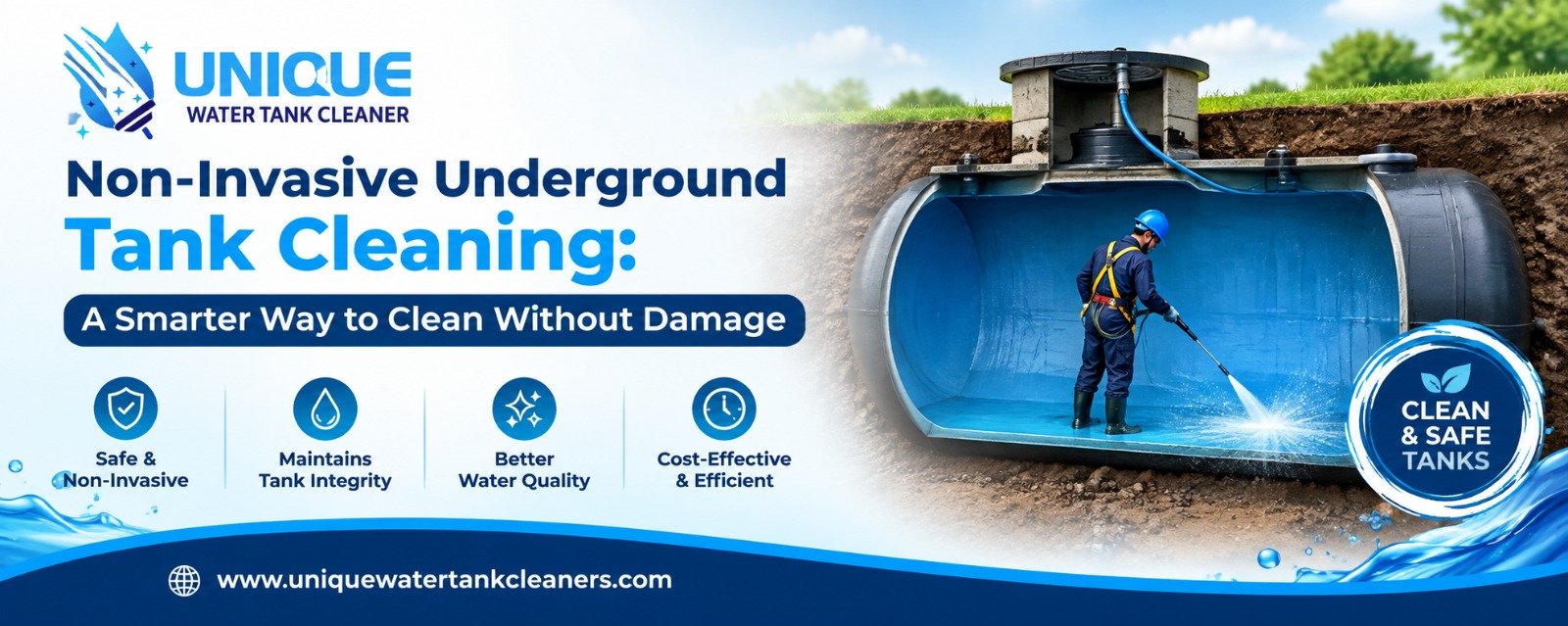
Underground water tanks are the backbone of clean water supply for homes, apartments, and commercial buildings. But over time, sediment, algae, rust, and bacterial growth build up inside, silently affecting water quality. For years, the only fix was manual tank cleaning — a process that meant draining the tank completely, sending workers inside, and disrupting water supply for hours or even days.
Today, there's a better option. Non-Invasive Underground Tank Cleaning Services offer a hygienic, efficient, and far less disruptive way to keep your underground tank clean, without the mess, safety risks, or water wastage that come with traditional methods.
In this blog, we'll explain how non-invasive underground tank cleaning works, why it's replacing manual methods, and what to expect when you book the service.
Non-Invasive Underground Tank Cleaning is a modern cleaning method that removes sludge, silt, and contaminants from underground water tanks using specialized submersible equipment — without requiring anyone to physically enter the tank and, in most cases, without fully draining it first.
Instead of manual scrubbing and bucket-by-bucket removal, trained technicians use pumps, vacuum-based extraction tools, and underwater cleaning equipment to:
Break down and remove sludge and sediment
Extract contaminated water and debris safely
Sanitize the tank walls and floor
Refill or top up the tank with clean water
This approach is increasingly preferred for Underground Water Tank Cleaning in residential societies, commercial complexes, and industrial facilities where hygiene, speed, and safety all matter.
Manual cleaning has been the default for decades, but it comes with several drawbacks that property owners are now trying to avoid.
Traditional cleaning requires draining the entire tank, which means losing hundreds or thousands of litres of stored water — a real concern in water-scarce cities.
Sending a worker into a confined underground space exposes them to poor ventilation, slippery surfaces, and contact with contaminated water. This is a genuine safety hazard that responsible service providers now try to minimize.
Manual cleaning can take a full day or longer, especially for large tanks, leaving residents or employees without water during the process.
Manual scrubbing depends heavily on the effort and reach of the person inside the tank. Corners, joints, and the base of the tank are often left inadequately cleaned.
This is exactly why Non-Invasive Underground Tank Cleaning has become the smarter, more reliable choice.
Here's a simplified look at the typical process followed by professional teams:
Initial Inspection – Technicians assess the tank's size, structure, and condition to plan the cleaning approach.
Sludge and Sediment Extraction – Submersible pumps and vacuum tools perform Underground Tank Sludge Removal, pulling out accumulated dirt without manual entry.
Wall and Floor Cleaning – Specialized brushes and jet-based tools clean the tank's internal surfaces thoroughly.
Water Filtration or Removal – Contaminated water is filtered or safely discharged, minimizing wastage compared to a full drain-and-refill approach.
Sanitization – Food-grade, safe sanitizing agents are used for complete Underground Water Tank Sanitization, eliminating bacteria and biofilm.
Final Quality Check – The tank is inspected for cleanliness before being handed back into use.
The entire process is typically faster, safer, and far less disruptive than traditional manual methods.
|
Factor |
Traditional Manual Cleaning |
Non-Invasive Underground Tank Cleaning |
|
Water Wastage |
High – tank is fully drained |
Low – minimal water loss |
|
Worker Safety |
Risky – manual entry required |
Safer – no confined-space entry |
|
Time Required |
Longer (often a full day) |
Faster, less downtime |
|
Cleaning Consistency |
Depends on manual effort |
Consistent, equipment-driven |
|
Disruption to Supply |
Significant |
Minimal |
|
Suitability for Societies |
Challenging for large tanks |
Ideal for large or shared tanks |
This comparison is why more housing societies, builders, and facility managers are shifting toward non-invasive methods for their Underground Water Tank Cleaning Services.
Non-invasive methods are particularly effective for:
Underground Sump Tank Cleaning in apartment complexes and gated communities
Underground Tank Cleaning for Society setups where multiple households depend on one shared tank
Commercial buildings, offices, and factories with continuous water demand
Large-capacity tanks that are impractical to drain frequently
If you're searching for Underground Water Tank Cleaning Delhi, Underground Tank Cleaning Noida, or Underground Tank Cleaning Gurugram, non-invasive cleaning is especially useful given how densely populated these regions are and how disruptive full drainage-based cleaning can be for daily water needs.
Several factors influence the Underground Water Tank Cleaning Cost, including:
Tank size and capacity – Larger tanks require more time and equipment
Level of sludge build-up – Tanks cleaned less frequently often need deeper extraction
Accessibility – Ease of reaching the underground tank affects labor and equipment needs
Type of service – Basic cleaning versus cleaning with full sanitization and inspection
Location – Service charges may vary slightly across cities and localities
While costs vary case by case, non-invasive cleaning often proves more cost-effective in the long run by reducing water wastage, minimizing labor time, and avoiding the need for frequent re-cleaning due to incomplete manual jobs.
You don't have to wait for visible dirt to take action. Watch out for:
Foul smell or unusual taste in tap water
Cloudy or discolored water
Slower water flow due to sediment build-up
Visible algae or slime near tank openings
It has been more than 6–12 months since the last cleaning
Regular cleaning — ideally every 6 months — helps maintain water quality and extends the life of your tank.
At Unique Water Tank Cleaners, we specialize in professional, non-invasive underground tank cleaning designed around hygiene, safety, and minimal disruption. Our approach focuses on:
Trained technicians using modern, submersible cleaning equipment
Thorough sludge removal and sanitization
Reduced water wastage compared to manual methods
Fast turnaround so your water supply is back up quickly
Reliable service across Delhi NCR, including Noida and Gurugram
Whether it's a residential sump, a housing society's shared tank, or a commercial facility, our team is equipped to handle tanks of all sizes with care and precision.
1. How often should an underground water tank be cleaned?
Most experts recommend cleaning underground tanks every 6 to 12 months, depending on usage, water source, and local water quality.
2. Is non-invasive tank cleaning as effective as manual cleaning?
Yes. In fact, it's often more thorough since specialized equipment can reach corners and surfaces that manual scrubbing may miss, while also reducing contamination risk.
3. Does non-invasive cleaning require draining the entire tank?
Not always. Depending on the tank's condition, non-invasive methods can significantly reduce or, in some cases, avoid full drainage, saving water in the process.
4. Is this method safe for drinking water tanks?
Absolutely. Reputable providers use safe, food-grade sanitizing agents suitable for tanks storing potable water.
5. How long does non-invasive underground tank cleaning take?
Duration depends on tank size and sludge levels, but most residential tanks can be cleaned within a few hours, much faster than traditional manual cleaning.
A cleaner tank means safer, healthier water for your home or building — without the hassle, water wastage, or safety risks of traditional cleaning methods.
Contact Unique Water Tank Cleaners today to book professional, non-invasive underground water tank cleaning services and experience a smarter, safer way to maintain your water storage system.
