
Nullam dignissim, ante scelerisque the is euismod fermentum odio sem semper the is erat, a feugiat leo urna eget eros. Duis Aenean a imperdiet risus.
Nullam dignissim, ante scelerisque the is euismod fermentum odio sem semper the is erat, a feugiat leo urna eget eros. Duis Aenean a imperdiet risus.


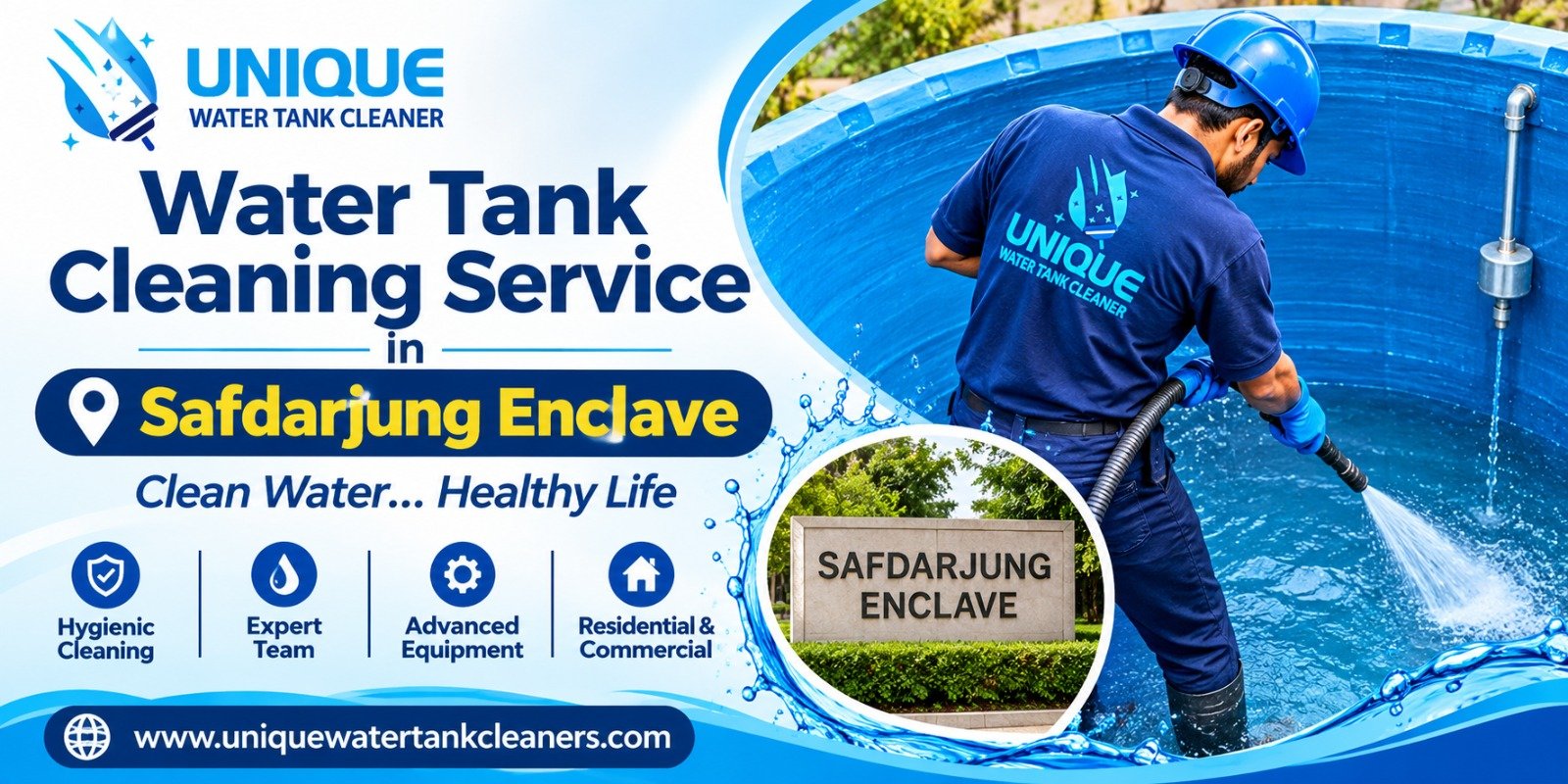
Stored water spends days or weeks inside a tank, and over time sludge, sediment and biofilm can build up where nobody can see them. Professional water tank cleaning removes that build-up and sanitizes the tank surfaces. This is one of the most practical steps toward hygienic water storage in homes, apartments, housing societies and commercial buildings across Safdarjung Enclave.
Unique Water Tank Cleaners, a Delhi-based company operating since 2011, provides mechanised tank cleaning for this purpose. If you are searching for a dependable Water Tank Cleaning Service in Safdarjung Enclave, this guide explains what the work involves, when it is needed and how to choose the right provider.
Quick Answer:
Professional water tank cleaning involves inspecting the tank, draining it, removing sludge and sediment, scrubbing the inner surfaces, cleaning with suitable equipment, applying an appropriate sanitizing treatment, and rinsing and inspecting the tank before it returns to use.
It matters because a tank that is never cleaned can collect residue over time. Regular cleaning helps keep stored water cleaner and the tank in better condition.
Safdarjung Enclave is an established part of South Delhi with a mix of independent houses, builder floors, apartment buildings, offices, clinics and guest houses. Most of these properties store water in rooftop tanks, underground sumps, or both.
A tank is a closed container, but it is not self-cleaning. Dust, silt, rust flakes and organic matter can enter through supply lines or poorly sealed lids. Once inside, they settle at the bottom and gradually form a layer that is hard to remove with routine care.
For a family, a clean tank means one less thing to worry about at home. For a housing society or commercial property, it is also a matter of responsibility toward residents, staff and visitors who depend on the same water supply.
You do not need a laboratory report to notice that something is off. Common signs include:
Water that looks cloudy, discoloured or carries visible particles
An unusual smell or taste in stored water
Slimy or greenish patches on the inner walls or lid, where visible
Sediment collecting in taps, filters or the RO pre-filter
Frequent filter clogging
No record of the last cleaning, or a gap of more than six months
If you notice any of these, a tank inspection is a sensible next step. These signs do not prove a specific problem, but they do suggest the tank deserves attention.
Most of what accumulates in a tank cannot be seen from the outside, and often not from the opening either.
Sludge and sediment. Fine silt and particles carried by the supply settle on the tank floor. In an underground sump, this layer can become thick because the tank is filled and refilled constantly.
Biofilm. This is a thin, slippery layer that can form on wet surfaces over time. It is easy to miss until the walls are scrubbed.
Rust and scale. Metal fittings, pipes and older tanks may shed particles that add to the residue.
Debris from outside. Dust, insects, leaves and other material can enter if lids are loose or vents are unprotected, especially on rooftop tanks.
This is why sludge removal is a central part of any serious cleaning job. Rinsing a tank without removing the settled layer leaves the main problem untouched.
Professional cleaning works by dealing with the sources of residue rather than the symptoms. By removing sludge, scrubbing walls and floors, and sanitizing surfaces, it reduces the material that can affect the quality of stored water.
It is also more thorough than a quick rinse. Trained teams use equipment to reach corners, joints and the floor of the tank, which are exactly the places that household cleaning tends to miss.
A cleaned tank does not replace drinking-water treatment. Many households still use RO or UV purifiers at the tap, and that remains sensible. Tank cleaning supports those systems by giving them cleaner water to start with.
What Is the Step-by-Step Process of Professional Water Tank Cleaning?
Each stage has a specific purpose. Here is how a well-run cleaning typically proceeds.
1. Initial Tank Inspection
The team checks the tank type, size, access points, inlet and outlet pipes, and the visible condition of the interior. This helps decide the right method and equipment.
2. Mechanised Water Drainage
Remaining water is pumped out using dewatering equipment. This is faster and more controlled than draining by hand, and it exposes the sludge layer at the bottom.
3. Sludge and Sediment Removal
The settled layer is lifted out so it does not remain in the tank or get stirred back into the water. This is usually the most important stage.
4. Internal Wall and Floor Scrubbing
Walls and floors are brushed to loosen biofilm, scale and stubborn residue that clings to surfaces.
5. High-Pressure Jet Cleaning
Where appropriate for the tank material and condition, high-pressure jets help dislodge loosened dirt from surfaces and corners.
6. Vacuum-Based Residue Removal
Vacuum equipment collects the loosened dirt and fine residue so it leaves the tank rather than settling again.
7. Antibacterial Treatment and Sanitization
A suitable sanitizing treatment is applied to the interior surfaces. The aim is to leave the tank cleaner and better prepared for storing water.
8. Final Rinsing and Inspection
The tank is rinsed and checked again before it goes back into use, so that residue and treatment traces are cleared.
Unique Water Tank Cleaners uses non-invasive cleaning technology designed to clean tanks without physical entry. This is useful for tanks that are narrow, deep or difficult to access.
Both tank types need the same outcome, but the working conditions differ.
Overhead water tank cleaning deals with rooftop tanks, which are exposed to dust, sunlight and weather. Access can be limited, so lightweight, portable equipment and careful handling matter. Lids and vents are also worth checking during the visit.
Underground water tank cleaning deals with sumps and larger storage tanks. These are often deeper, hold more sludge and have restricted openings. Mechanised pumping and vacuum equipment make a real difference here, and they reduce the need for anyone to work inside the tank.
Unique Water Tank Cleaners provides mechanised cleaning for both types, so a property with a rooftop tank and an underground sump can have both handled by the same team.
A reliable water tank cleaning company brings more than labour. It brings method.
Proper equipment. Pumps, vacuums and jet cleaners reach places manual cleaning cannot.
Trained teams. Experienced staff know how to handle different tank materials, sizes and access conditions.
A defined process. Each stage is done in order, so nothing important is skipped.
Suitable sanitization. Treatment is applied in a controlled way rather than guessed.
Less disruption. Mechanised work is generally quicker, which matters for occupied buildings and offices.
Hiring professionals also saves families and building managers from the awkward, time-consuming job of cleaning a tank themselves.
A commonly followed guideline is to clean water tanks at least once every six months. This is a general benchmark, not a fixed rule.
Some properties may need more frequent attention, such as:
Buildings with heavy daily water use
Tanks that are old, rusted or poorly sealed
Properties where water quality has visibly changed
Commercial premises, clinics, guest houses and food-related businesses where water is used often
Housing societies should keep a simple cleaning log with dates, so the next service is never forgotten. A tank should also be cleaned after construction work, repairs or long periods of disuse.
When comparing providers, a few practical questions help separate careful operators from casual ones.
Ask how long the company has been working and whether it handles both overhead and underground tanks. Ask what the cleaning process includes, and whether it covers sludge removal and sanitization or only rinsing. Find out whether the equipment is mechanised and how the team handles tanks with difficult access.
Look for clear answers rather than vague promises. A good provider explains each stage plainly, gives realistic timelines and does not make exaggerated claims about results.
Also consider convenience. For properties in South Delhi, a company that already works across Delhi NCR is likely to be familiar with the building types, access challenges and scheduling needs common in the area.
Unique Water Tank Cleaners was established in 2011 and is based in Delhi. The company provides mechanised overhead and underground tank cleaning for residential and commercial customers across Delhi NCR.
Its non-invasive cleaning technology is designed to clean tanks without physical entry. That supports a cleaner, more controlled working process, particularly in tanks that are hard to access.
For anyone seeking a Water Tank Cleaning Service in Safdarjung Enclave, the company’s focus is straightforward: a defined process, suitable equipment, trained teams and sanitization that supports hygienic water storage. Customers looking for water tank cleaning in South Delhi can use the same approach for homes, apartment blocks, societies and commercial properties.
How much time does professional water tank cleaning take?
It depends on the tank size, type and condition. A typical residential tank can often be completed within a few hours, while larger or heavily silted tanks may take longer. An inspection gives a more accurate estimate.
Do I need to be present during the cleaning?
It helps to be available for access and to confirm which tanks need attention, but you do not have to supervise the entire process.
Is water tank sanitization really necessary after cleaning?
Cleaning removes visible dirt and sludge, while sanitization treats the surfaces afterward. Together they leave the tank better prepared for storing water.
Can I clean my water tank myself?
Light surface cleaning is possible, but thorough work needs pumps, vacuum equipment and proper technique. Professional cleaning is more reliable, especially for large, deep or underground tanks.
Does cleaning the tank mean I can stop using my water purifier?
No. Tank cleaning supports hygienic storage, but it does not replace drinking-water purification at the point of use.
A water tank works quietly in the background, which is exactly why it is so easy to forget. Regular professional cleaning removes sludge, scrubs away residue and sanitizes surfaces, so the water you store starts from a cleaner base.
Unique Water Tank Cleaners helps residents, housing societies and commercial property owners in Safdarjung Enclave schedule professional cleaning for overhead and underground tanks. If it has been a while since your last service, now is a good time to book an inspection.
Contact Unique Water Tank Cleaners
Phone: +91-7290007528
Email: uniquetankcleaner@gmail.com
Website: www.uniquewatertankcleaners.com
