
Nullam dignissim, ante scelerisque the is euismod fermentum odio sem semper the is erat, a feugiat leo urna eget eros. Duis Aenean a imperdiet risus.
Nullam dignissim, ante scelerisque the is euismod fermentum odio sem semper the is erat, a feugiat leo urna eget eros. Duis Aenean a imperdiet risus.


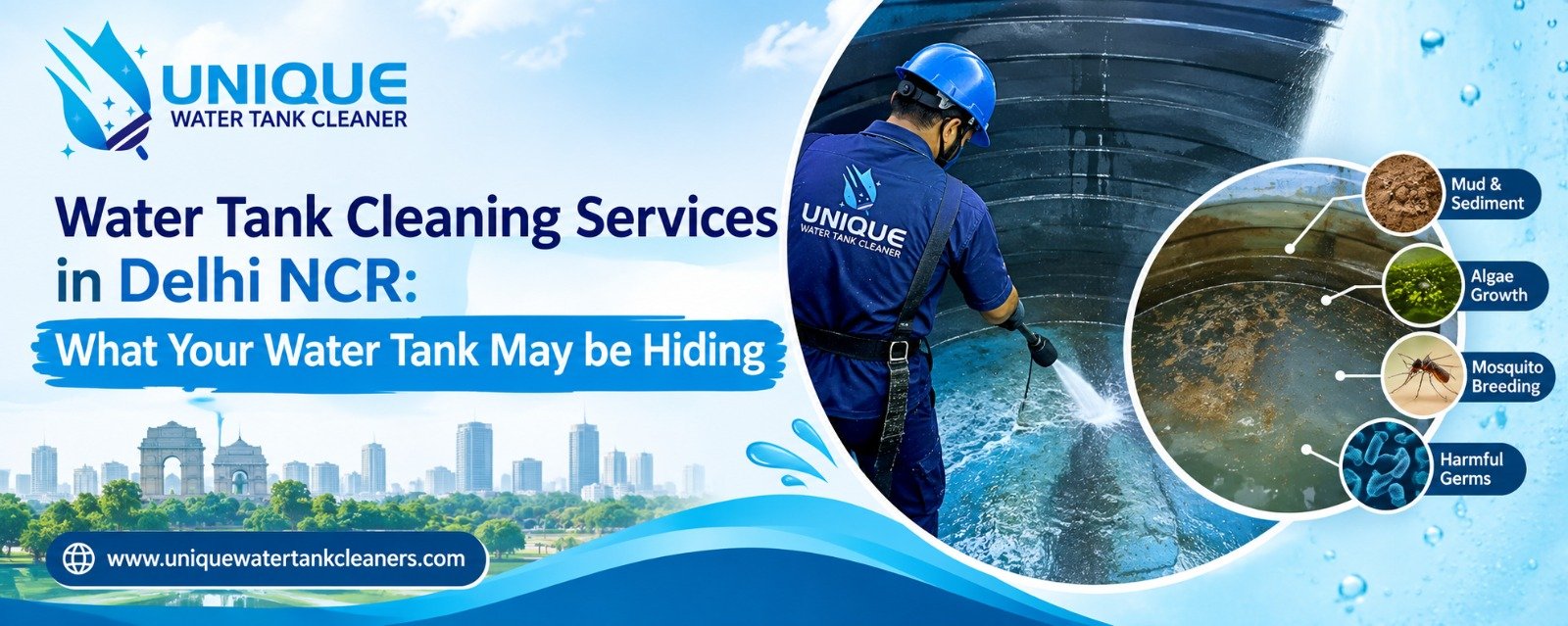
Most of us trust the water that flows from our taps. We fill glasses, cook meals, and brush our teeth without wondering where that water has been sitting. Between the municipal line or borewell and your kitchen, there is usually a storage tank, often on the roof or buried underground, that is rarely opened and even less often inspected.
In Delhi NCR, this blind spot matters more than elsewhere. Fine dust, traffic and construction pollution, hard water, and heavy daily consumption all put extra strain on stored water. Unique Water Tank Cleaners, a Delhi-based company established in 2011, has years of experience in hygienic and mechanized water tank cleaning, and one observation keeps repeating: clear-looking tap water often begins its journey in a tank carrying unseen contamination. This article explains what those layers are and why Water Tank Cleaning Services in Delhi NCR deserve attention.
Common Hidden Contaminants Found in Water Tanks
The local environment works against stored water. Dust from construction sites, dry winds, and unpaved roads settles on rooftops and slips through vents and loose lids. Hard water, common across the region, leaves mineral scale on tank walls, and that rough surface holds dirt and microbes more easily than smooth walls do.
Usage patterns add to the strain. In dense housing, tanks are refilled several times a day, stirring up settled sediment and bringing in fresh particles each time. Summer heat encourages microbial growth, while underground tanks face seepage from surrounding soil and drains. Together, these factors make Delhi NCR water quality depend heavily on tank condition.
A tank is not simply a container holding clear water. Over months and years it develops distinct layers, most invisible from the surface.
Dust accumulation starts on lids, vents, and the water surface. Sediment deposits settle on the floor and compact into sludge buildup that can remain for years. On the walls, biofilm formation creates a slimy coating of bacteria and organic matter that a quick rinse does not remove. Stagnant water zones develop in corners and below the outlet pipe, where algae formation is most likely. Tanks opened after years of neglect often reveal a thick, dark layer of sludge that surprises even long-time owners. Insect activity is common wherever a lid does not seal properly, since mosquitoes breed in still water and dead insects feed bacteria.
Contamination often announces itself quietly. Odor is usually the first clue: a musty or earthy smell at the tap points to algae or decaying matter. Discoloration, whether yellow, brown, or green, suggests rust, disturbed sediment, or algae. Reduced water quality may appear as altered taste, cloudiness after a refill, or filters clogging faster than expected. Visible deposits, such as grit in a glass, indicate that sludge or scale is breaking away. The most overlooked sign is long cleaning gaps. If nobody remembers when the tank was last cleaned, deposits have almost certainly built up.
Visible Signs vs Hidden Risks
Stored water reaches nearly every part of a household, so contamination travels widely. For drinking, bacteria in water tanks can overwhelm household filters and cause stomach upsets, especially in children and older family members. In cooking, poor water affects taste and, if not boiled properly, food safety. Bathing exposes skin and eyes to impurities, and sensitive skin may react with itching. Household use suffers too: rust stains fixtures and laundry, and mineral scale shortens the life of geysers, washing machines, and pipes.
Water tank maintenance works best as a routine, not a reaction. Preventive maintenance means securing lids, screening vents and overflow pipes, checking for cracks, and scheduling cleaning before problems become visible. Hygiene standards matter as well: proper cleaning removes sludge, scrubs surfaces, and disinfects with suitable agents rather than simply rinsing. Over the long term, this protects water quality, reduces plumbing repairs, and keeps clean water storage dependable throughout the year. Household tanks are commonly advised to be cleaned at least twice a year.
Water tank cleaning services in Delhi NCR have changed considerably. Traditional cleaning often meant sending someone inside with a bucket and brush, then rinsing with the tank's own water. That approach can miss fine sludge and may introduce new contaminants. Modern methods are more controlled. Mechanized cleaning lifts deposits with far less manual contact, while non-invasive methods reduce the need for anyone to enter the tank. Sludge removal systems and vacuum cleaning draw settled material directly from the floor, and sanitization techniques address whatever remains on walls and corners. Companies such as Unique Water Tank Cleaners use this kind of hygienic, mechanized approach, which helps most with overhead tank cleaning where access is tight, and underground water tank cleaning where sludge runs heavier.
Different properties face different risks. Residential properties rely on one tank for the entire family, so a lapse affects everyone. Apartments have large tanks serving many households, which makes a fixed schedule essential. Schools serve children who are more vulnerable to waterborne illness. Offices depend on stored water for pantries, dispensers, and washrooms, where employee wellbeing is involved. Hospitals carry the highest stakes, since patients with weak immunity need hygienic water storage for care, sterilisation, and sanitation.
Recommended Water Tank Maintenance Schedule
A water tank is easy to forget because it sits out of sight, yet everything you drink, cook with, and bathe in passes through it. Sediment, sludge, algae, rust, insects, and bacteria build up slowly, and warning signs are easy to dismiss. Regular inspection, sensible maintenance, and modern cleaning methods prevent this. Whether you manage a home or a hospital, knowing what water tank cleaning services in Delhi NCR should involve, and how often, is the first step toward safer water. Clean water starts with clean storage. For guidance, Unique Water Tank Cleaners remains a trusted Delhi NCR specialist, working in hygienic tank cleaning since 2011.
Neglected tanks typically hold sediment, sludge, algae, rust particles, dead insects, and biofilm on the walls. Bacteria often live within these deposits, so water can look clear yet still be unsafe.
Homes should clean tanks at least every six months, while apartments, schools, and hospitals need shorter intervals. Dusty seasons, hard water, or heavy usage may call for more frequent cleaning.
Yes. A covered tank can still develop algae if the lid is cracked, vents are unscreened, or light enters through thin material. Warm temperatures and stagnant water speed up growth.
Watch for unusual odor, yellow or brown discoloration, slimy walls, grit at the tap, and quickly clogging filters. A tank not cleaned for over a year is also a warning sign.
Professional water tank cleaning services in Delhi NCR use mechanized equipment, vacuum-based sludge removal, and proper disinfection, reaching areas brushing and rinsing miss. This lowers the risk of leaving residue or introducing new contamination.
