
Nullam dignissim, ante scelerisque the is euismod fermentum odio sem semper the is erat, a feugiat leo urna eget eros. Duis Aenean a imperdiet risus.
Nullam dignissim, ante scelerisque the is euismod fermentum odio sem semper the is erat, a feugiat leo urna eget eros. Duis Aenean a imperdiet risus.


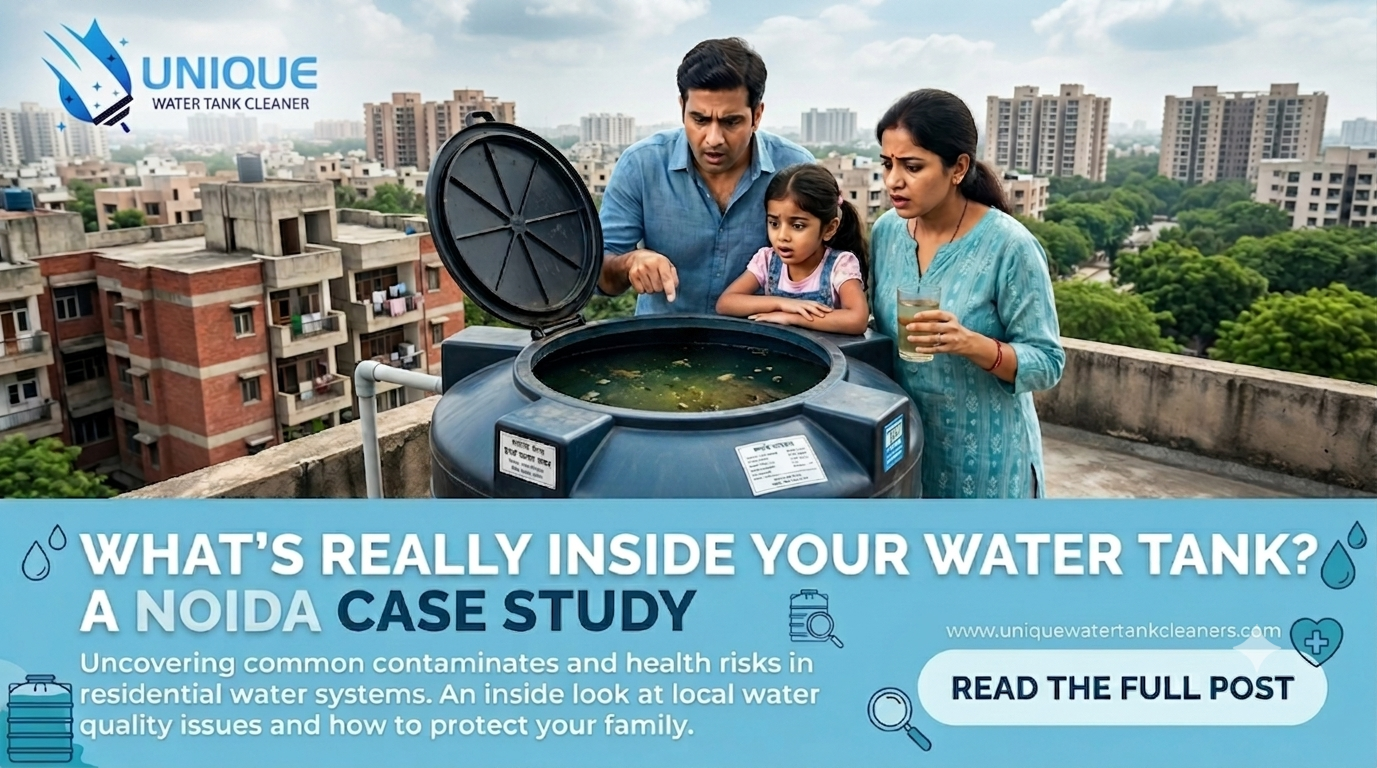
Most homeowners in Noida assume that the water flowing from their taps is clean because it looks clear. However, what many people fail to realize is that the quality of water inside a storage tank can change significantly over time. Dust, sediment, bacteria, algae, insects, and other contaminants can gradually accumulate inside water tanks without any visible warning signs.
A water tank acts as the final storage point before water reaches your kitchen, bathroom, washing machine, and drinking water system. If the tank itself is contaminated, every drop of water entering your home can potentially carry unwanted impurities.
This case study explores what was discovered inside a residential water tank in Noida, how contamination developed, the risks involved, and why professional Water Tank Cleaning Service in Noida has become an essential requirement for modern households.
At Unique Water Tank Cleaners, we frequently encounter situations where tanks appear normal from the outside but reveal serious contamination once opened and inspected.
Urban growth across Noida has increased pressure on water infrastructure. High-rise apartments, independent houses, commercial buildings, educational institutions, and industrial facilities all depend heavily on water storage systems.
Recent reports from the NCR region have highlighted recurring concerns regarding water contamination, poor maintenance practices, aging pipelines, and insufficient routine inspections. Cases of bacterial contamination and water-quality complaints continue to emerge across residential areas.
When water remains stored for extended periods, contaminants can settle at the bottom of the tank and create ideal conditions for microbial growth.
Common contamination sources include:
A family residing in a multi-story home in Noida contacted a professional cleaning team after noticing several unusual signs:
The homeowners believed the issue originated from municipal water supply. However, a complete inspection revealed a different story.
When the overhead water tank was opened, the following conditions were observed:
| Inspection Area | Findings |
|---|---|
| Tank Lid | Not fully sealed |
| Tank Floor | Thick sediment accumulation |
| Side Walls | Algae formation |
| Corners | Sludge deposits |
| Water Surface | Floating organic particles |
| Internal Condition | Lack of cleaning for extended period |
The tank appeared normal externally but contained multiple contamination layers internally.
The cleaning team documented several types of contaminants.
Over time, suspended particles present in incoming water settled at the bottom of the tank.
These deposits included:
A significant sludge layer had formed across the tank floor.
Areas exposed to sunlight through small openings showed visible algae growth.
Algae can:
One of the most concerning findings was biofilm development.
Biofilm is a slimy layer formed by microorganisms attaching themselves to tank surfaces.
Characteristics include:
Inspection revealed insect remains trapped within the storage system.
Poorly sealed lids often allow:
to enter the tank.
The contamination process often develops gradually.
| Time Period | Potential Changes |
|---|---|
| 1–3 Months | Minor dust accumulation |
| 3–6 Months | Sediment build-up begins |
| 6–9 Months | Algae formation possible |
| 9–12 Months | Increased bacterial activity |
| 12+ Months | Significant sludge and contamination |
Because the process is slow, most property owners remain unaware until visible symptoms appear.
Many households overlook early indicators.
Water Smells Different
Cloudiness can result from suspended particles and sediment disturbance.
Visible Sediment
Particles settling in buckets or storage containers suggest tank contamination.
Frequent Plumbing Issues
Sediment buildup can clog:
Algae Around Openings
Green growth near tank openings often indicates contamination inside.
Water contamination can affect daily life in numerous ways.
Contaminated water may be used for:
As a result, tank hygiene directly influences household hygiene.
| Contaminan | Possible Impact |
|---|---|
| Sediment | Reduced water quality |
| Algae | Unpleasant odor and taste |
| Biofilm | Microbial growth |
| Insects | Organic contamination |
| Dust | Water discoloration |
| Sludge | Bacterial development |
A major observation from competitor websites is the emphasis on mechanized cleaning. Professional cleaning generally follows a structured multi-stage process.
At Unique Water Tank Cleaners, cleaning is approached systematically to ensure comprehensive tank hygiene.
The tank is assessed for:
Existing water is removed safely to expose internal surfaces.
Settled deposits are removed from:
Internal walls are thoroughly cleaned to remove:
Advanced equipment helps eliminate stubborn residues.
Professional sanitization targets microbial contamination.
The tank is inspected to verify cleanliness before refilling.
Not all tanks face identical contamination challenges.
| Feature | Overhead Tank | Underground Tank |
|---|---|---|
| Sunlight Exposure | Higher | Lower |
| Algae Risk | Higher | Lower |
| Dust Entry | Moderate | Moderate |
| Sediment Accumulation | Moderate | High |
| Inspection Ease | Easier | More Complex |
| Cleaning Requirement | Regular | Regular |
Several local factors contribute to contamination risks.
Dust generated from construction projects can enter improperly sealed tanks.
Monsoon conditions increase the likelihood of contamination entering storage systems.
Older residential sectors often have aging water infrastructure that may contribute to sediment accumulation.
Large residential societies consume significant quantities of stored water daily.
Cleaning frequency depends on multiple factors.
Regular inspections and scheduled cleaning help maintain water quality.
Society management should ensure routine maintenance of common storage systems.
High water usage may require more frequent inspections.
Consistent hygiene standards make periodic cleaning essential.
Reality: Many contaminants remain invisible.
Reality: RO systems cannot clean a contaminated storage tank.
Reality: Even newly installed tanks accumulate sediment over time.
Reality: Cleaning schedules should depend on usage patterns and environmental conditions.
Many homeowners attempt basic cleaning themselves.
However, professional services offer advantages such as:
Unique Water Tank Cleaners specializes in delivering reliable Water Tank Cleaning Service in Noida for:
The focus remains on restoring hygiene, improving water storage conditions, and helping residents maintain cleaner water systems throughout the year.
A residential water tank in Noida that appeared perfectly normal externally revealed significant contamination internally. Inspection uncovered sediment deposits, algae growth, sludge accumulation, insect debris, and biofilm formation.
The case demonstrates a critical reality: clean-looking water does not necessarily indicate a clean storage system.
Routine inspections and professional maintenance play an important role in maintaining water quality and preventing contamination from developing unnoticed.
The answer to the question, What’s Really Inside Your Water Tank?, is often surprising.
Many Noida residents assume their water storage systems are clean because they encounter no obvious problems. Yet contamination develops gradually and silently. Sediment settles, algae grows, biofilms form, and water quality declines long before visible symptoms appear.
As Noida continues to expand and water infrastructure faces increasing pressure, maintaining clean storage tanks becomes more important than ever. Regular inspection, preventive maintenance, and professional cleaning can significantly improve the hygiene of stored water.
If you are looking for a dependable Water Tank Cleaning Service in Noida, Unique Water Tank Cleaners helps ensure that the water stored in your tank remains cleaner, safer, and better suited for everyday household use. By treating water tank maintenance as a priority rather than an afterthought, homeowners can take an important step toward protecting the quality of water used every day.
1. How often should I schedule a Water Tank Cleaning Service in Noida?
Most residential water tanks should be professionally cleaned at least every 6 months. However, the cleaning frequency may vary depending on water usage, tank size, environmental conditions, and the quality of the incoming water supply. Regular inspections can help determine the ideal cleaning schedule.
2. What are the signs that my water tank needs immediate cleaning?
Some common warning signs include foul-smelling water, visible sediment in buckets, discoloration, algae growth near the tank opening, clogged taps, and unusual tastes in the water. If you notice any of these issues, it is advisable to arrange a professional inspection and cleaning service.
3. Can a dirty water tank affect my family's health?
Yes. Over time, water tanks can accumulate sludge, dust, algae, biofilm, and other contaminants that may impact water quality. Maintaining a clean storage tank helps reduce the risk of contamination and supports better hygiene throughout the household.
4. Why should I choose professional water tank cleaning instead of cleaning it myself?
Professional cleaning services use specialized equipment and proven cleaning methods to remove sludge, sediment, algae, and other contaminants from hard-to-reach areas. Companies like Unique Water Tank Cleaners ensure a more thorough cleaning process than basic DIY methods.
5. Does Unique Water Tank Cleaners provide cleaning services for both overhead and underground water tanks?
Yes. Unique Water Tank Cleaners offers professional Water Tank Cleaning Service in Noida for overhead water tanks, underground tanks, residential properties, apartment complexes, commercial buildings, schools, hospitals, and other facilities that rely on clean water storage systems.
6. What contaminants are commonly found inside water tanks?
Water tanks can contain sediment, dust, mud, algae, rust particles, insect debris, organic matter, and microbial biofilm. Many of these contaminants are not visible from the outside, which is why periodic inspection and professional cleaning are important for maintaining water quality.
